Every TikTok retail media partnership today flows retailer data into TikTok ad inventory. Out of Phone today amplifies TikTok content onto external screens. Out of Phone: Commerce bridges the gap.
TikTok creator content placed natively on a merchant's own website. Search, then product page. A new monetisation route for creator content beyond the platform, with attribution per creator and per stock-keeping unit (SKU), funded by brands and merchants who already invest in retail media.
A new model, alongside two existing TikTok product families.
TikTok already runs commerce on platform via TikTok Shop and GMV Max. The retail media partnerships, Walmart Connect, Instacart and others, bring first-party retailer data into Ads Manager for targeting and attribution.¹ Out of Phone takes TikTok content the other direction onto billboards, cinemas and OOH screens. Out of Phone: Commerce extends that family by placing TikTok creator content on the merchant's store, with creators rewarded for driving online and offline conversions.
Retailer data → TikTok
The existing partnerships flow first-party retailer signals into TikTok Ads Manager. Brands buy TikTok ad inventory, retailer data improves the targeting, and conversion is measured on the retailer through clean-room match-back.
TikTok content → merchant store
Creator content placed natively on a merchant's own website. Brand-funded ad inventory on search results pages. Merchant-curated creator content in product description page galleries. Creator share tied to per-SKU off-platform conversion. The architectural patterns are proven inside TikTok. This product extends them.
The product description page (PDP).
Indistinguishable from how shoppers already browse the merchant. The TikTok creator video sits as one of the product gallery images, marked with a small "as styled on TikTok" caption. The merchant curates which creator content runs against each SKU. Scroll the mockup to see it as a customer would.
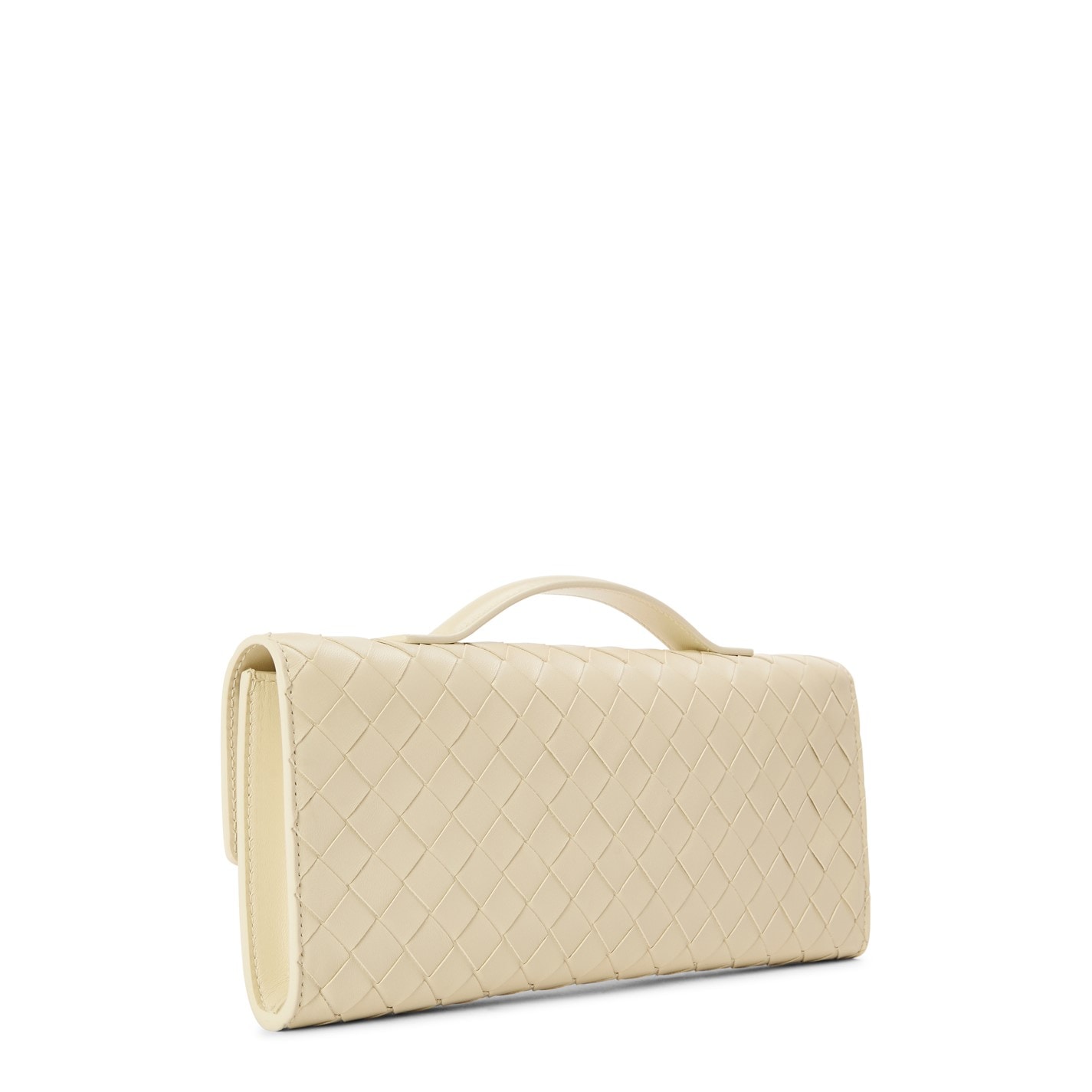
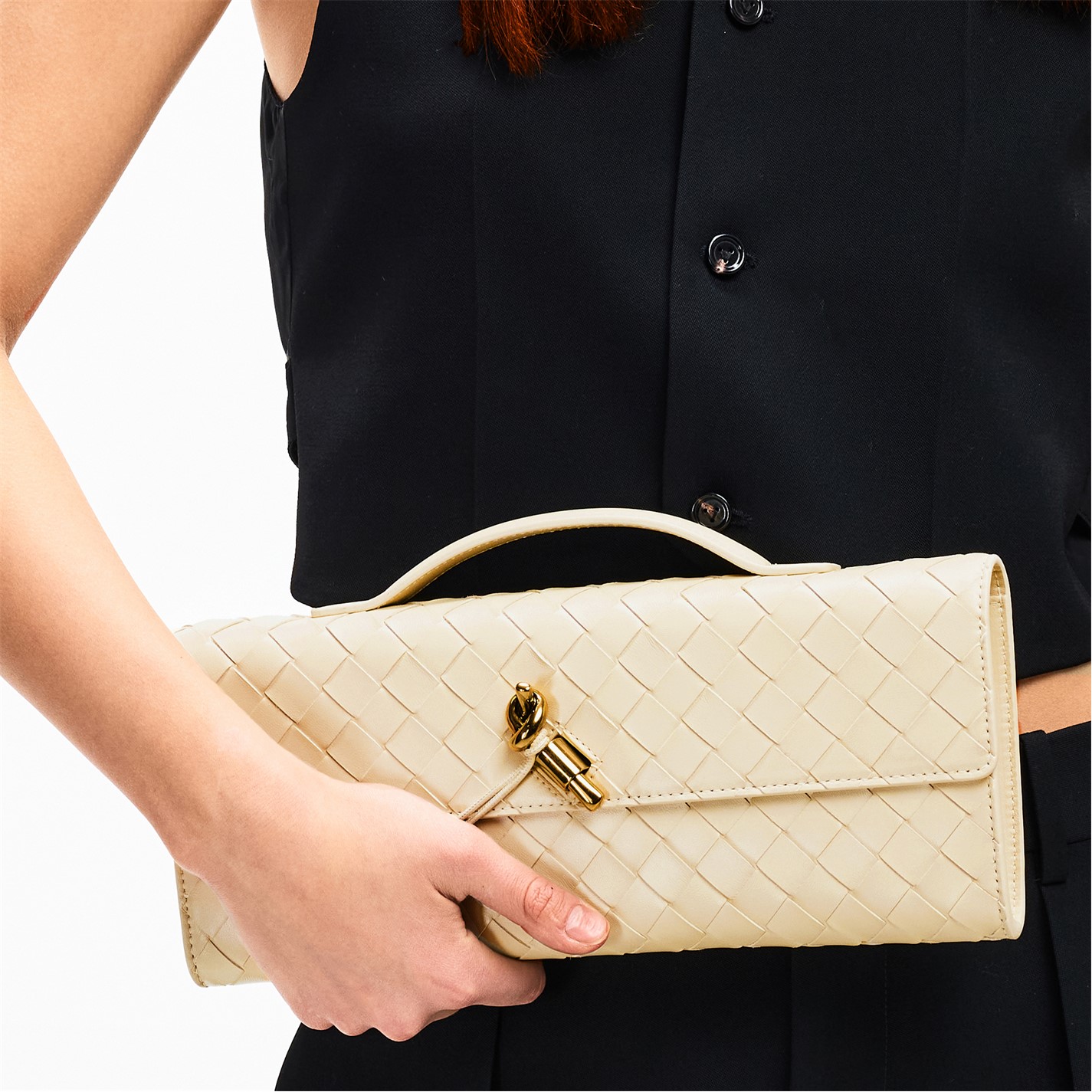


Andiamo Clutch
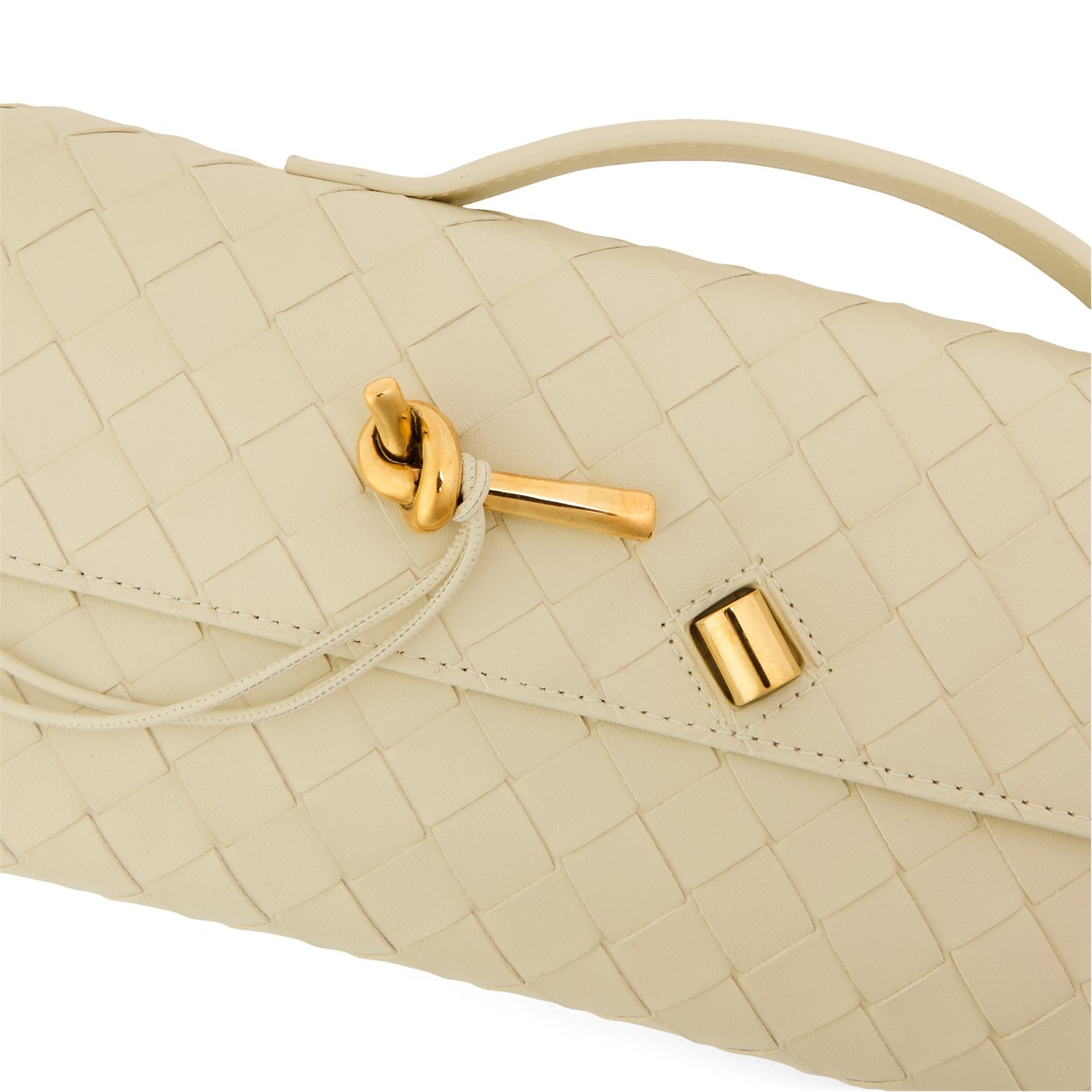
Bottega Veneta's Andiamo Clutch stands as a masterpiece of Italian artistry in premium accessories. This exclusive women's handbag showcases the house's signature Intrecciato weave in supple lambskin leather, perfect for evening events or adding refined style to daily looks.
Product Highlights:
- Meticulously made in Italy using the iconic Intrecciato weaving technique, demonstrating Bottega Veneta's renowned leather expertise
- Distinctive brass-finish knot closure on the front, paired with a practical top handle for versatile carrying options
- Interior features six card slots and an additional pocket, lined in luxurious calfskin leather for organisation
- Includes a protective dustbag and requires cleaning with a soft, dry cloth to maintain its pristine condition
Product code: 834727
Material: 100% lambskin leather. Lining: 100% calfskin leather. Hardware: brass-finish.
Free Standard Delivery on orders over £100. Next Day Delivery available.
Free 28 Day Returns on most items. See full Returns Policy for details.
Higher completion than standard in-feed ads. The mechanic that makes creator content outperform brand creative; authentic, attention-holding, made by people the audience already trusts.
Pixel and Events API on the merchant domain, matched in a clean room. Per creator, per product. Deterministic where identity is bridged via loyalty or hashed contact, modelled where it isn't.
Embedded TikTok content lifts on-page dwell time, a known signal for Google ranking. Separately, TikTok content has been surfacing in Google's video carousel since 2021.² The same PDP can rank twice.
Two layers of approval, on infrastructure that already exists.
Every piece of TikTok creator content placed on a merchant's surface has been pre-cleared by the creator and the brand through the existing Spark Ads authorisation flow. That flow is already live, already used by brands daily, and already understood by creators. Out of Phone: Commerce uses the same authorisation pool. Nothing in the underlying brand-safety mechanism is invented for this product.
On top of Spark Ads, two surface-specific approval routes apply:
On the search results page, the unit is a brand-funded ad placement, so the brand approves which creator content runs against which query and SKU. Approval can be by individual asset (human-reviewed) or by automated rules where the brand has set those up (e.g. pre-authorised creator lists, content quality thresholds).
On the product description page, the unit is real estate the merchant owns, so the merchant approves which Spark-authorised creator content appears in their product gallery. Same approval mechanic, different approver, because a different party owns the surface.
Either party can revoke at any time. Creators retain takedown rights on their own content, as today.
In-merchant search.
New ad inventory on the merchant's search results page. A sponsored creator content card slotted into the SERP, brand-funded, ranked by an auction the brand bids into. 64% of Gen Z search-first on TikTok in beauty, fashion, food and fitness.¹ The same shopper, on the merchant's site, gets matched creator content where intent is highest. Commercially, this mirrors Criteo's Sponsored Products, with TikTok creator content as the creative unit.
SEARCH RESULTS
We found 106 products for Cocktail dress

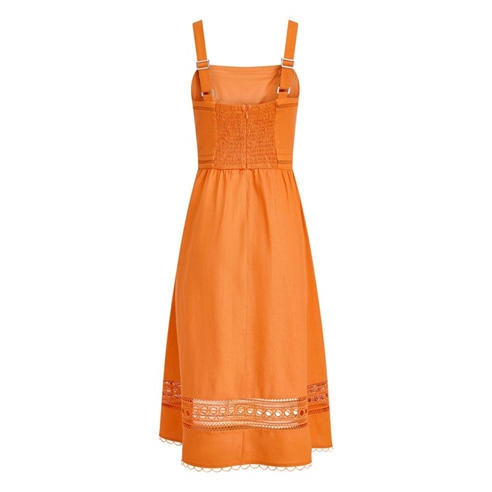
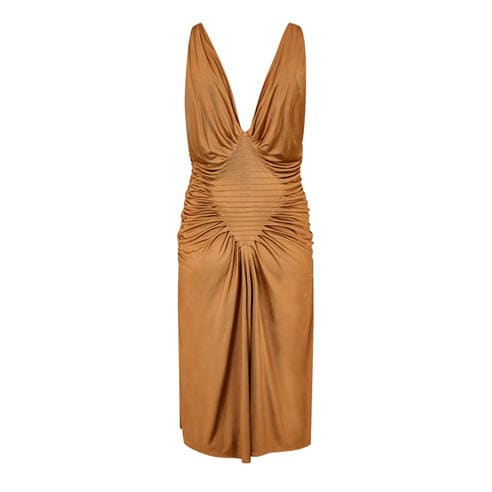
The Criteo model, with creator content as the creative. First-price auction at SKU or category. Brands bid; closed loop measures. The card is a new sponsored unit, not a re-skin of organic results.
The format that already works on TikTok works on the merchant's search results page. No reformatting; no extra production cost for the brand.
Eligible content is gated to creator UGC the brand has authorised through Spark Ads. The brand owns the approval here because the brand owns the spend.
Frasers Group and Boots.
Outside the grocery sector, two UK retail media networks have the infrastructure to run this. Frasers Group's Elevate launched in May 2025.¹ Boots Media Group has been running since 2021.² Each is profiled below.
Frasers Group · Elevate
Phase 1 · Pilot leadElevate launched in May 2025 as a multi-banner retail media network across Sports Direct, Flannels and Frasers, plus Everlast Gyms and Frasers-owned shopping centres. Powered by Zitcha as the platform layer, with Sports Direct loyalty live since February 2025.³
CCO David Clark has publicly described Elevate as targeting the broadest, deepest and most insightful network outside grocery and pure play. What every retail media network is competing on right now is creative that holds attention. Culturally relevant, fresh, made by real people. TikTok creator content is exactly that.
The integration target is Zitcha. The data is first-party. The screens are deployed. The newer of the two networks, and the one most actively buying content supply now.
Boots · Boots Media Group
Phase 1 · ParallelBoots Media Group, founded 2021 with SMG, runs closed-loop attribution across online and offline through a Criteo and LiveRamp partnership.⁴ Advantage Card data combines with offline transaction data in a clean-room environment, giving brands omni-ROAS reporting on retail media spend. Initial integration analysis showed a 22% ROAS uplift when integrating online and offline sales versus online only, on the top 50 brands investing in Boots over a five-week period.⁴ 600+ in-store digital screens are deployed across 450 stores, with a roadmap to 88% UK population reach via digital signage.⁵
Boots Media Group already runs TikTok creator activations within brand campaigns.⁶ Out of Phone: Commerce sits in line with that direction, adding closed-loop creator attribution and a structured supply route for TikTok content into Boots' existing retail media surfaces.
Boots, the more established of the two networks, is already operating at scale.
Rosie Houston · MD, Boots Media Group
- Frasers Group launches Elevate retail media network, May 2025
- Boots Media Group launch, September 2021
- Zitcha and Frasers Group launch Elevate
- Boots, Criteo and LiveRamp closed-loop attribution partnership, November 2024
- Boots in-store digital signage rollout, Retail Media Summit 2024
- Boots Media Group LinkedIn: TikTok influencer activations
The architectural patterns are proven inside TikTok. This product extends them.
Out of Phone for off-platform reach. GMV Max for closed-loop optimisation across organic, paid and affiliate. The Pixel and Events API stack for cross-domain conversion measurement. Spark Ads for creator authorisation. On the retailer side, the data platforms, clean rooms and loyalty identity bridges are also operating. The new work is the bridge between them, plus the per-creator attribution and surface-specific approval layers on top.
What works for Frasers and Boots can work for everyone.
The product is architected so the heavy lifting stays on TikTok's side. Content matching, creator authorisation, brand safety, attribution, optimisation. The merchant integration is light: a content delivery layer plus event firing on existing commerce events, deployed via a plugin for SMBs or a lightweight SDK for larger retailers. Which means the same mechanic that runs at Frasers and Boots can run for mid-market retailers, and eventually for any independent business that sells online.
Frasers Group and Boots, anchor partnerships across an established network. Bespoke integrations and mutually beneficial commercial terms prove the concept for expansion.
£100m to £1bn revenue specialists. Lookfantastic, Cult Beauty, End Clothing, AllSaints. Hundreds in the UK. Most don't operate retail media networks today. With a lightweight self-serve onramp, they can.
Shopify merchants, indie DTC brands, high-street independents, specialist retailers. Tens of thousands of them in the UK alone. Plugins for Shopify and other e-commerce platforms make deployment a one-click install. Retail media, democratised. Accessible to businesses of any size.
The strategic shape. TikTok is one of the few platforms with operational SMB-fluency at scale through Smart+, TikTok Shop SMB sellers, and the long tail of the creator economy. The DNA exists. Out of Phone: Commerce fits the existing operating model.
The same logic, in store.
The proposition for in-store is the same as it is for the web. TikTok creator content, brand-approved, matched to the SKU, played on screens already running brand-funded retail media. The content experience carries across digital and physical shopping experiences; the commercial model adjusts because the attribution chain in-store is different.
In-store retail media is the fastest-scaling part of the category. WARC forecasts global retail media spend at $196.7bn in 2026,¹ with European spend growing at double the rate of the broader digital advertising market.¹ European retail media specifically reached €13.7bn in 2024 (21.1% YoY) and is forecast to hit €20.8bn in 2026 and €28.8bn by 2028.² The screens are being deployed; the budgets are flowing; what's missing is creative supply that holds attention better than what's playing today.
The same creator content style they engage with on TikTok, surfaced where the buying decision happens. Not an advert that interrupts; content that informs.
More engaging creative on screens the retailer is already operating. Better-performing inventory, no extra hardware.
Creative the brand already authorises through Spark Ads now reaches in-store moments. One creator video, three surfaces. No reformatting, no extra production.
Creators paid CPM for verified in-store impressions of their authorised content. A new monetisation route, on inventory that already exists.
Per-creator deterministic attribution holds on the web because identity is bridged via Pixel and Events API. In-store, that chain breaks: multiple creators rotate on the same screen, multiple shoppers pass the same content, and matching a specific till purchase to a specific impression isn't reliable. The honest commercial model is therefore CPM, not CPA. The brand pays per thousand verified impressions of their creator's content on in-store screens; the creator earns a share of that CPM.
Brand bids in an auction for the sponsored slot. Creator earns a share of the resulting conversion, deterministically attributed via Pixel and Events API.
Merchant places the creator content in their existing gallery. Creator earns a share of resulting conversion per completed video view and converted SKU.
Brand pays per thousand verified impressions on in-store screens. Creator earns a share of that CPM. Attribution is impression-based, not conversion-based.
The technology that enables this already exists in market. Vusion's existing technology is a working example.
The architecture is vendor-neutral. Vusion's particular combination of products is one credible path; Hanshow operates adjacent infrastructure. The integration described here has not been tested.
Formerly SES-imagotag. Publicly listed on Euronext Paris. Operates electronic shelf-edge labels and an in-store retail media platform deployed across European grocery and convenience retailers.
Wireless mini-cameras at the shelf edge, used today for stock detection, planogram compliance and shelf-event monitoring. Deployed across 100+ Monoprix stores and rolling out at Carrefour. The cameras watch shelves, not faces.³
Vusion's retail media product. Runs digital content on screens across deployed estates today, taking brand spend and reporting on impressions. Already operating; this is the surface a TikTok creator content supply could feed into.
In-store retail screens become more engaging with TikTok creator content as the creative supply. Shelf interaction technology makes the next step possible: when a shopper picks up a product, the nearest retail media screen surfaces relevant creator content for that exact SKU. Targeted, informational, in the moment of decision.
Shelf-event detection is designed to detect product movement, not people. Identity bridges at till via loyalty card, not in the aisle.
WARC's forecast for 2026, growing through $200bn in 2027. As retail media inventory grows, so does the demand for creative that performs on it. TikTok has the creative.